A companion to the book
Hedonism in Catalonia
Olive groves, wine carved into rock, truffles in the winter fog and long tables under the Pyrenees. Extra stories and photographs for the readers of our book.
Nine journeys ↓About the book
This book was born from a simple wish: to show Catalonia the way it is lived, not the way it is sold. We spent a season travelling between family masias, small cellars and mountain kitchens, meeting the people who make oil, cheese, cava and wine with their own hands. What you hold in your hands is a slow guide to pleasure — and this site is its open, growing appendix.
Chapters
Nine places, nine encounters. Below — fragments from the book and photographs that did not fit on its pages.
01 — Baix Camp
Can Viver
Among olive groves and family stories
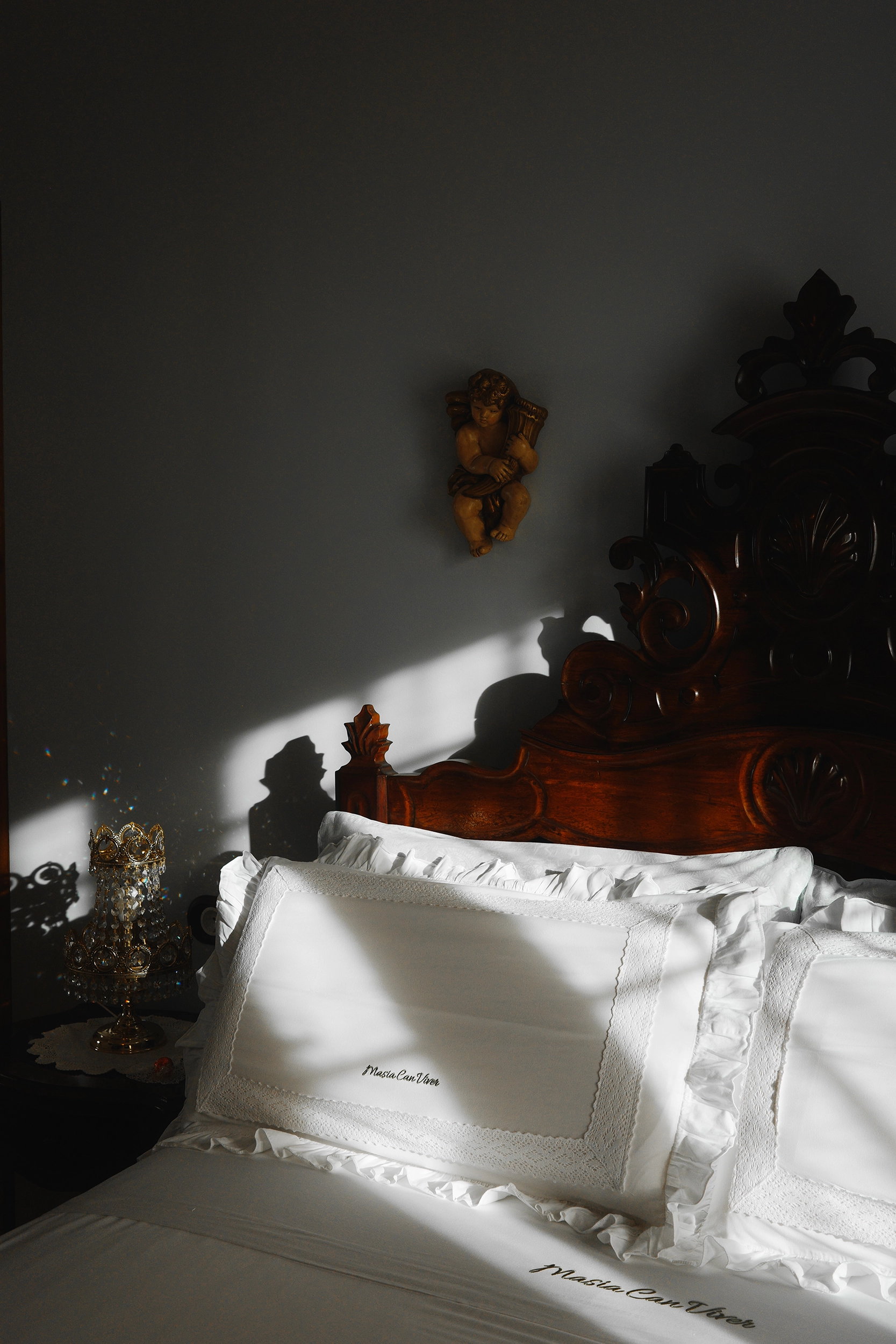
José and Rosa, the owners of Can Viver, welcome you warmly and are flattered by any interest in their small olive oil production and in the masia itself, which they have been restoring from ruins for more than twenty years. José, heir to an almost thousand-year-old Catalan dynasty first mentioned in the 12th century, carefully collected the family heirlooms now displayed in the cozy hall on the second floor.
The main purpose of the visit is the tasting. After a tour of the mill and the olive grove, Rosa invites you to the table, where José talks about varieties, aromas and differences. The tasting is conducted blind, which turns it into a real gastronomic adventure — finished off with dishes Rosa prepares from local products and, of course, Viver oil.
“If a bird has pecked at a berry, it has already oxidized — and we throw such berries away.”
02 — Osona
Llavina
A small home cheese production facility
If you love meat delicacies and fresh cheeses as much as the Catalans do, visit the Llavina family. In their small home dairy inside an old stone house they make cheeses whose taste you will remember for a long time. Mario shows guests one of the first vertical mills built in Catalonia and tells how his ancestors used this rare structure.
After the tour life seems to slow down. You walk into the kitchen, where the table is already set — simply, homely, but with soul. Fresh cheeses, sausages, all family-made, and a glass of local wine. At the end Mario may bring out a bottle of homemade ratafia, a Catalan herb liqueur made to a secret family recipe.
03 — Penedès
Can Ràfols dels Caus
The cradle of cava
The history of Can Ràfols dels Caus dates back to the 15th century, although most of the current buildings are from the 17th. The house still keeps Roman household items found on the estate — more than two thousand years old. Its main gem is a modern winery carved right into the rock, its entrance framed by stone doors weighing about two tons.
The winery is built on three levels: the process runs vertically, from top to bottom, so the wine needs no pumps and no pressure and barely touches oxygen — it simply moves down by gravity. The location inside the rock creates unique acoustics, so opera concerts are often held right among the wine amphorae.
04 — Penedès
Artcava
The world of Catalan winemaking
For those who want to go deeper into Catalan winemaking, Artcava — a small family winery in Penedès — is the ideal destination. In total they produce about 15,000 bottles of natural cava a year. At first glance it may seem like an ordinary winery, but don't jump to conclusions.
Here you can attend a master class on cava production: personally remove the sediment from the bottle, choose one of three varieties, cork it yourself and affix the label. What better gift than a bottle of cava you helped to produce? And if you want more, the owners will tell you about cava with hops — beer aromas with the sparkle of wine.
05 — Can Amat
Calçotada
The most vibrant gastronomic tradition
It is impossible to talk about Catalonia without mentioning calçotada. It is an event in itself: friends and families gather outdoors to roast calçots, a special variety of long green onion, grilled over burning grapevines. Catalans take it seriously — aprons, sometimes gloves and bibs, because dipping the stalks in thick romesco rarely ends without stains.
The season begins in late November and lasts until April, peaking in January — exactly when winemakers prune the vines, which become the perfect fuel. After the fire, guests move inside to rooms with fireplaces and stained glass, where the low winter sun draws patterns on white tablecloths, and wine is poured from a porró.
06 — Girona
Truffle Hunting
For truffle lovers
For truffle lovers there is no better entertainment than a hunt in the foggy winter morning forests of Catalonia. Spain is the largest supplier of black winter truffle, Tuber melanosporum, and a significant part of it grows here, in the northwest near Girona. From November to March the real gastronomic hunt takes place.
Your guide is Joan, who has been hunting truffles for over half a century — the most experienced hunter in Catalonia — together with his elderly but very mischievous dog Nancy. Watching the dog work the frozen ground and then unearthing a black nugget with your own hands is worth the early start.
07 — Vic
VIA Restaurant
“The truffle maestro” in the heart of Vic
In the heart of Vic, an hour's drive from Barcelona, stands the VIA restaurant. In a historic mansion, in an atmosphere of quiet luxury, chef Nicolau Roger — the region's gastronomic star — creates truly unique dishes, working only with seasonal products from small producers.
He is called the “truffle maestro” for his ability to combine fresh local products with truffles, revealing their flavour in the most unexpected variations. Even an inexperienced gourmet will appreciate a menu where dishes are made without artificial additives and every ingredient keeps its essence.
08 — Cerdanya
Torre del Remei
Historic elegance in the Pyrenees
There are places in Catalonia that keep their historical charm while meeting the requirements of the most discerning traveller. Torre del Remei is a vivid example. Located in the foothills of the Pyrenees near Puigcerdà, it combines the aesthetics of an early 20th-century modernist mansion with a contemporary level of service.
The TR 1910 restaurant deserves special attention: it reflects the idea of continuity, with the chef adding new accents to a menu based on traditional Catalan recipes and local seasonal products. And the botanical-inspired Remei Lounge is a fine place to end the evening.
09 — La Cerdanya
Mas Sant Marc
Rural charm in the Catalan Pyrenees
For those who appreciate a simple and understated atmosphere, Mas Sant Marc is an excellent choice. It is an old masia converted into a hotel that has kept the spirit of a family farm — authentic country-style rooms, a garden, and the quiet rural landscape of La Cerdanya around it.
Here, in a calm and friendly atmosphere, you can ride horses — the hotel has its own stable — cycle around the foothills of the Catalan Pyrenees, play golf on the hotel course or simply hike the surroundings.
The authors
Text
Pavel Nekrasov
Pavel travels to understand how people live with their land. He writes about food and wine as a form of memory — who grew it, who pruned the vine, whose grandmother's recipe it is. Every chapter of this book began with a long conversation at somebody's kitchen table.
Photography
Natalia Levshina
Natalia photographs in available light and waits for the moment when a place forgets about the camera. Hands, steam, dust in a sunbeam, a dog's back in a truffle forest — the images in this book are her way of saying that beauty is usually already there.
Follow our journey
More stories, photographs, and hidden corners of Catalonia appear on our Instagram. Follow along for extra content that did not fit in the book.
Follow @hiddengems.anywhereWrite to us
A question about a place from the book, a request for a route, or simply a hello — we read everything.
Open to collaboration
We are open to offers of all kinds: from publishers interested in joint books, from private farms, wineries, oil mills, masias and small producers who want to share their story. We are happy to work on stories both on a non-commercial basis and on a commercial basis — everything is discussed.